Pages

Showing posts with label Disinfection. Show all posts

Wednesday, March 18, 2026

Deep Dive into Water Disinfection: Keeping Water Safe

Colorado requires all public drinking water systems to have continuous chemical disinfection, except for two suppliers that meet strict standards to retain disinfection waivers and hand-pumped wells at campgrounds. Continuous disinfection is part of a multi-barrier approach to ensuring safe drinking water is available to your consumers.  

Disinfection of drinking water inactivates (i.e., kills or prevents pathogens from replicating) waterborne pathogens, such as bacteria and viruses. The amount of microorganisms needed to cause an infection varies widely between pathogens. The median infectious dose for Salmonella typhosa is 1,000,000 organisms (but can be much less for infants), Hepatitis A virus is between 10-100, and Giardia lamblia and Cryptosporidium are less than 10 organisms. Disinfection does not completely eliminate all living organisms in the water, but does significantly reduce potential acute waterborne disease risk. The pathogen risk reduction is expressed in terms of “log inactivation”. For example, a 3.0 log inactivation value means that 99.9% of microorganisms of interest are inactivated. 

Disinfection can be accomplished using either chemical oxidants, such as free chlorine, chloramines, or ozone, or by photo-inactivation with ultraviolet light. Most Colorado water systems use free chlorine as their main disinfectant. Disinfection with chlorine or chloramines provides a persistent disinfectant residual in the distribution system. This disinfectant residual can provide defense against harmful organisms that enter the distribution system through backflow events, pipeline leaks, low pressure events, or other contamination pathways. 

Regulation 11: Colorado Primary Drinking Water Regulations requires that systems maintain a minimum disinfectant residual concentration of 0.2 mg/L at the entry point and 0.2 mg/L in the distribution system. These two requirements are the same for groundwater (GW), groundwater under the direct influence of surface water (GWUDI), and surface water (SW) systems. Each source type has additional disinfection requirements outlined below: 

  • GW sources are considered protected groundwater and are expected to have limited or no pathogens. GW systems must comply with the Groundwater Rule through either triggered source water monitoring in the event of a total coliform positive sample or by certifying that the GW treatment process always provides 4-log (99.99%) inactivation of viruses. 
  • GWUDI and SW sources likely have pathogen sources in the water (e.g., beavers, point discharges). Pathogenic organisms are expected and GWUDI/SW systems must meet pathogen log removal/inactivation requirements in the Surface Water Treatment Rule (SWTR). The required treatment is based on three target pathogens:
    • Cryptosporidium: 2-log (99%) removal. 
      • Higher levels may be required based on LT2 source water monitoring.
    • Giardia lamblia: 3-log (99.9%) removal/inactivation.
    • Viruses: 4-log (99.99%) removal/inactivation. 

For SW/GWUDI systems: filtration and disinfection are two complementary critical barriers for protecting public health. Drinking Water Policy 4 outlines the removal credits for various filtration types (e.g., conventional filtration, direct filtration). The disinfection treatment must be designed and operated to provide any remaining log inactivation required in the SWTR. These processes work together to ensure that drinking water is safe for the public. 

Next time, we will discuss disinfection log inactivation and the critical parameters for design and compliance demonstration. 

Below are some resources that will give more specific information about the requirements outlined above. If you have questions, please contact Melanie Criswell at melanie.criswell@state.co.us. 

Resources

Melanie Criswell - Lead Service Line, Corrosion, and Emerging Contaminants Engineer

Wednesday, June 28, 2023

Chlorine Residual Monitoring and Pocket Colorimeters


During sanitary surveys, inspectors evaluate where chlorine residual sampling is being performed and will request to do side-by-side chlorine residual measurements with the operator. Chlorine residual monitoring is required both for entry point chlorine residual monitoring and also in the distribution system during bacteriological sampling. Public water systems that only use sodium or calcium hypochlorite or chlorine gas to form free chlorine for disinfectant residual should be monitoring and reporting free chlorine residual at all times. Conversely, any systems adding ammonia to form chloramines must monitor and report disinfectant residual as total chlorine residual. In this article, we will discuss handheld colorimeters and questions we’ve received from operators during sanitary surveys on properly measuring both high range and low range chlorine residuals. Improperly using an EPA accepted test method, using expired or incorrect DPD reagent or not verifying or operating disinfectant monitoring analytical equipment in accordance with manufacturer requirements can result in a violation of Regulation 11, Section 11.46. This was one of the Top 10 most cited violations cited during sanitary surveys in 2022.

The main issue inspectors often see in the field is measuring low range vs. high range free chlorine residual. For HACH pocket colorimeters (PCII) in the low range (LR) setting, a readout of 2.2 will flash repeatedly if the sample concentration is above 2.2 mg/L free chlorine. Recording the 2.2 mg/L as the chlorine residual is not correct and will result in a violation during a sanitary survey. The operator should be familiar with how to change their chlorine analyzer setting from low to high range. For a HACH DR300 or a HACH PCII, you must select the High Range (HR) menu option (please see your manual). For HACH units in High Range, the sample cell also changes to the plastic vial with a 5-mL sample and two 10‑mL DPD Free Chlorine Reagent Powder Pillows or two 10‑mL DPD Total Chlorine Reagent Powder Pillows must be used for each test. Please see your manual for your specific chlorine residual kit, and note that some manuals have to be downloaded online now.

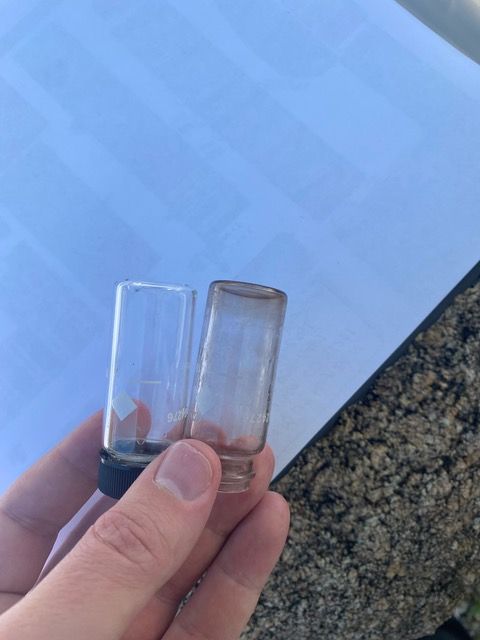
Other issues that can result in field based violations for chlorine residual monitoring is using expired DPD reagent and glassware that is caked with DPD (see photo below). 

Operators must be familiar with their colorimeter and should have written maintenance procedures and a maintenance log implemented for the analyzer, including routine verifications required by the manufacturer (HACH does not specify a frequency for pocket colorimeters but CDPHE does quarterly checks with GELEX standards on our pocket colorimeters). Please note that for online chlorine analyzers used for compliance with Regulation 11, online analyzers must be verified at least once a week by taking a parallel grab sample and analyzing it by another verified method (bench top) or by comparison with other parallel analyzers (see Policy 4 Guidance). All verification checks and results should be written down in a logbook.

Please avoid these field-based violations related to chlorine residual monitoring and ensure proper disinfection by being familiar with your analyzer and following proper sampling protocol. For any questions or concerns, please email our Field Services team at cdphe_wqcd_fss_questions@state.co.us.  

➽ Connor Clarke, CWP, Field Services Section

➽ Heather Young, PE, CWP Field Services Section

Wednesday, June 14, 2023

Lessons Learned - Weld county legionella cluster

What Occurred?

In November and December of 2022, the Weld County Public Health Department consulted with CDPHE about an unusual number of cases of Legionnaires Disease occurring in a relatively small area. There were five reported cases of the illness and case interviews were completed for four of the five affected people. Excerpt from the internal communications at the time:

"We have recently seen a notable increase in reported legionella infections in Weld County – five cases in the last 12 days. Of the three most recent cases, two live within two miles of each other and one lives within seven miles of the other two. We have not yet found any evidence of linked exposures."

In a situation where a cluster of illnesses is identified and there is a potential for the root cause of the illness to be drinking water, public health partners work with the Safe Drinking Water Program here at CDPHE to assess the likelihood/possibility that the drinking water is the root cause of the cluster (or waterborne disease outbreak).

What was the Response?

Based on initial interviews with the ill folks, the county determined that there appeared to be a lack of common exposures that are usually seen. Typically in a legionella outbreak, you may find that all infected people used the same recreation center hot tub or shop at the same grocery store that has vegetable misters running. 

The county and state epidemiologist group then reached out to the Safe Drinking Water Program staff to check the known addresses of the ill people to see if they were served by the same water system and if it was possible that a contamination event had occurred at that specific water system. We specifically were trying to determine whether there had been any service disruptions, major construction projects, water main breaks, or other events related to the water utilities that service these individuals' residential areas. 

The Safe Drinking Water Program then interfaced with water system operational staff to confirm whether there had been any water quality issues in these areas. Also, it was determined that these homes- while being in proximity to each other, were served by four different water providers. All providers demonstrated robust chlorine residuals and were able to show a lack of bacteriological contamination in their drinking water.

While the specific cause of this outbreak was never determined, public drinking water was eliminated as a source.

What can a water operator do to prepare for such an event?

If a cluster of illnesses occurs in your service area, you may be called upon to produce records of treatment and distribution system water quality in order to eliminate any potential that your drinking water caused the illnesses. 

Maintaining treatment plant records is standard procedure for most public water systems.  However, having a comprehensive distribution system microbial sampling that goes beyond the minimums of the total coliform rule is more rare. Consider developing water quality sampling starting with distribution system basic water quality parameters like chlorine residual, pH, turbidity and heterotrophic plate count. This will help provide assurance that your distribution system water quality is not the cause of a legionella outbreak. Also, water sampling for legionella can be done on a quarterly or semi-annual basis to provide further assurances to the public that the drinking water quality you provide to your customers is safe and relatively pathogen free. 

➽ Tyson Ingles, Lead Drinking Water Engineer

Wednesday, March 22, 2023

History of Disinfection Waivers and Where We Go From Here

 Hello everyone, 

In the Fall 2013 issue of Aqua Talk we ran a brief article regarding the history of disinfection waivers in Colorado and where we were planning to go in the future. We thought it would be a good time now to provide an update. 

In 1955 the State Board of Health recognized the tremendous risk reduction from waterborne disease that results from disinfecting drinking water, and adopted a resolution recommending that all drinking water supplied to the public contain at least 0.1 parts per million of free available chlorine. In 1967 the State Board of Health required disinfection of all drinking water unless that requirement was specifically waived by the Colorado Department of Public Health and Environment based on evidence that the drinking water was free of contamination.  

Over the years from 1967 to about 2000, approximately 126 disinfection waivers were granted across the state including 62 community water systems serving 60,695 people. The department lacked a systematic process for reviewing the status of these waivers on a periodic basis. The department began to review the status of disinfection waivers in about 2007, which was before the 2008 Alamosa waterborne disease outbreak. We found that many of these systems had already begun to disinfect their drinking water. 

In 2010, the Water Quality Control Commission banned new disinfection waivers and imposed more appropriate requirements on systems with disinfection waivers if they wished to retain them. After that, the division began systematically reviewing all the disinfection waivers in the state to make sure that they complied with the requirements and working with systems to get disinfection installed if their disinfection waiver was withdrawn. We continued implementing this rule, and systems that struggled with bacterial contamination had their waivers withdrawn. We also started to periodically review the waivers every year. By late 2010, the number of disinfection waivers fell to less than 40 public water systems. 

From late 2010 through about 2013, the division implemented the new requirements regarding disinfection waivers and many systems chose to begin disinfecting while several disinfection waivers were withdrawn as well. By late 2013 only about 15 disinfection waivers remained in place. Since then, the division continued to review disinfection waivers and withdraw waivers when circumstances merited, typically when multiple positive total coliform or E. coli events occurred without there being an adequate way to assure that such events would not recur.

As of 2023, only two (2) of the approximately 2,075 public drinking water systems in Colorado have disinfection waivers, and they are both at community water systems. The systems are the Towns of Ward in Boulder county serving about 230 people and Sanford in Conejos county serving about 850 people. Without further regulatory changes, those systems will retain their waivers as long as they continue to meet the regulatory requirements. We review the status of disinfection waivers annually, whenever there are total coliform rule violations or positive bacterial tests, and during sanitary surveys. The graph below displays the history of disinfection waivers in Colorado from the high point of 2007 to 2023.


➽ Ron Falco, P.E. Safe Drinking Water Program Manager

➽ Bryan Pilson, Technical and Regulatory Implementation and Coordination Unit manager


Wednesday, October 27, 2021

Positive impacts of enhancing disinfection requirements - 2000s, 2010s, and today

We have written numerous articles over the years about disinfection and maintaining a proper chlorine residual.  Just search the blog for chlorine or disinfection and you will find excellent information and references from simple fixes to profound policy positions on appropriate disinfection residuals. Did you ever wonder how effective chlorination is in preventing drinking water contamination and what happened to disinfection waivers in Colorado?

In Regulation 11 rulemaking in 2010, the Water Quality Control Commission (commission) decided to remove the authority of the department to grant disinfection waivers. So at that time all waivers were evaluated and held static. The rulemaking also established more rigorous regulatory oversight for waivered systems. The rulemaking also required that all disinfecting groundwater systems had to maintain 0.2 mg/L at their entry points (surface water already had that requirement). Then, in the 2015 rulemaking to update the total coliform rule, the commission chose to establish a storage tank inspection regulation and also require that all systems maintain at least 0.2 mg/L chlorine residual throughout the distribution system. All of these rule changes were meant to recognize best practices performed by most water systems and to compel the few systems that were not up-to-speed to better protect their distribution systems. While the yearly data is noisy, it is important to recognize that the overall number of E.coli positive samples reported to us per year went dramatically down around the mid-2010s. See the graph below and table below.


It is also worthwhile to look back further at the trends over a few decades:


It’s apparent that over time E. coli violations dramatically decreased. Since about 2014, the majority of E. coli violations occurred at public drinking water systems that were out of compliance with the state’s disinfection requirements. 

As the 2010s progressed, we developed rigorous protocols to evaluate systems that maintain disinfection waivers to make sure public health was being protected without disinfection present. Therefore, over time, the department revoked waivers at systems that could not maintain compliance with the rigorous regulatory requirements for waivered systems. Other waivered systems voluntarily began chlorinating their water systems based on concerns over liability and realization of the relatively low level of effort that chlorination requires. 

At present, only two public water systems still maintain disinfection waivers. These two systems are the last disinfection waivers that will be used in Colorado. These communities have shown through regulatory compliance and their track record of water quality that the public in those communities has a measure of protection from waterborne disease even though they do not chlorinate. However, these communities ultimately may choose to chlorinate their water in the long term. The department’s position would be that it is always best to chlorinate when possible. Also, through natural disasters, aging infrastructure, or unforeseen events, the two systems may ultimately end up having their waivers revoked due to failure to maintain compliance.  

As discussed in the previous blog postings about the importance of chlorination, Colorado has a proud tradition of protecting our public drinking water supplies to the greatest degree possible.

Tyson Ingels, P.E Lead Drinking Water Engineer

 Ron Falco, P.E. Safe Drinking Water Program Manager

Wednesday, October 6, 2021

Simple Fixes - Chlorine Monitoring with Pocket Colorimeters

Whether you're a large system or small, surface water or groundwater, free chlorine or total, monitoring at the entry point or in the distribution system, water quality monitoring of disinfection residual is an important part of the job. Disinfection residuals are vital to protecting public health and must be reported to the state to show compliance with drinking water regulations. If your go-to monitoring equipment is a Pocket Colorimeter, here are some important things to keep in mind when monitoring chlorine residual.

  1. My pocket colorimeter is flashing “2.2”; what does that mean? Some pocket colorimeters have the option of low range and high range. For chlorine values less than 2.0 mg/L, it’s best to use low range for the greatest accuracy as high range is subject to variable levels of interference. But

    if the instrument consistently reads 2.2 or flashes 2.2, the high range procedure needs to be followed. Using the special high range sample cell, follow the normal steps of zeroing the sample prior to adding the reagent. For Pocket Colorimeters, you’ll add two 10-mL doses of reagent to a 5-mL sample and read. It’s always good practice to review (or re-review) the procedure as a reminder of the proper sequence for analyzing samples.


  2. Have you checked your glassware lately? Dirty glassware can lead to erroneous readings. Hold the glassware up to a white sheet of paper.  Does the glassware look clear or can you see a black film build up? If so, it might be time to purchase some new glassware. You can also try an at home remedy with a 50/50 mix of white vinegar and water. Leave the glassware to soak overnight and rinse out in the morning. Do not use a scrub brush or abrasive cleaning utensil of any kind as that may scratch the glassware.
  3. Free? Total? There’s a difference? There is a difference and you want to make sure you are analyzing for the correct chlorine based on your monitoring schedule.  Free chlorine reagent reacts with free chlorine in the sample, and should be read immediately. Total chlorine reagent reacts with ALL the chlorine present in the sample and requires a 3 minute hold time before reading. If your system uses chloramines or receives water from a chloraminated system, then you need to monitor for TOTAL chlorine. Performing a free chlorine residual reading for a chloramine system, will result in a reading of little to no chlorine. This is because
    most of the free chlorine has bonded with ammonia to produce chloramine. If you operate a free chlorine system and use total chlorine reagent, you won’t see a significant difference, but generally the total will be higher as it has reacted to ALL the chlorine in the sample, and not just the free chlorine. The important thing is to make sure you are using the correct reagent that corresponds to your monitoring schedule.
  4. Is your reagent current? Check expiration dates. Make sure your reagents used for analyzing and reporting residuals to the state are current. A lot of systems out

    there like to use the Swiftest Dispensers. Make sure you know what the expiration date is on the DPD, especially if you’ve acquired the product from a secondary market. 

Aspen Coombs, PE, Senior Field Engineer


Wednesday, May 12, 2021

Success Story: Seasonal Start-up Procedures

Reopening Your Seasonal Water System

Of the approximately 2,050 active public water systems in Colorado, nearly 20% (407) are seasonal. Unfortunately, roughly 10% of all our state’s public water systems have reported that they are temporarily closed or have delayed their seasonal operations due to the pandemic. It seems there is light at the end of the tunnel as Colorado’s COVID-19 Dial has been retired and the responsibilities of restrictions have been handed over to counties. In addition, vaccination is now available to all. Many seasonal and year-round water systems are gearing up to reopen for the summer. We here at the Department wish for everyone to prosper and stay safe while doing so; we would like to remind all seasonal systems of their requirement to complete the Department’s seasonal startup procedures prior to serving water to the public.  

On April 1, 2016, the Revised Total Coliform Rule (RTCR) of the Colorado Primary Drinking Water Regulations (Regulation 11) became effective. One item that was incorporated or modified was the seasonal systems and start-up procedures. The Department created the “Department’s Revised Total Coliform Rule Start-up Procedure for Seasonal Systems Handbook” (seasonal system handbook) to help guide these systems on how to evaluate and ensure that their waterworks and water have been properly inspected, disinfected and treated prior to service to the public. (See below for specific information about hand-pumped well systems). Here are some key highlights of what can be found in the seasonal system handbook: 

  • Conduct a waterworks inspection: look for any damage or evidence of contamination and ensure all sanitary seals are intact.
  • Integrity check: identify leaks in the waterworks as these pose a potential avenue for contaminants to enter the water system. 
  • Disinfection and flushing: disinfect the water system prior to opening to kill any microorganisms that could’ve been introduced during the offseason. 
  • Special Purpose Sampling: collect a “special purpose” total coliform (TC) sample within the distribution system prior to opening (must test absent for the presence of coliform bacteria). Please note that this sample does not count as your “routine” compliance sample. 
  • Routine Sampling: A routine TC sample must be collected within the first month of operation. This TC sample must be collected after seasonal start-up procedures have been completed. For example if a supplier collects a special purpose TC sample on May 10,  but does not complete start-up procedures till May 12, and the supplier begins serving water to the public in May the supplier must collect a routine TC after May 12 to satisfy that month's monitoring requirement.
  • Certification: submit a “Certification of Completion of Start-up Procedures” to the Department no later than the 10th day of the following month after startup.
  • Record keeping: hold onto your “Seasonal System Start-up Log” along with the special purpose total coliform sample result, as these will be reviewed during sanitary surveys. For these reviews, please note that it would be beneficial if you add details to your start-up log concerning your disinfection and flushing procedures such as chlorine dosing levels and hold times. 
  • What’s new: seasonal systems with finished water storage tanks, two periodic tank inspections are required each year. One must be conducted while completing the seasonal startup procedures and another while serving water to the public and at least 30 days after the pre-opening inspection.

Since the RTCR rule came into effect, Colorado seasonal water systems have been increasingly successful at doing a great job of following the seasonal system handbook and submitting their certificate of completion. The Department is appreciative and hopeful that operators and systems continue this trend moving forward.


For those year-round systems that have been closed due to COVID-19, in the interest of public health the Department strongly encourages that procedures matching the seasonal startup procedures in the handbook be completed prior to opening. Even if water pressure and treatment have been maintained while closed, a thorough system super-chlorination and flushing to remove any stagnant water should be conducted due to Legionella contamination concerns. For suppliers who own and/or operate premise plumbing systems, the system flushing should also include a thorough flushing of the hot water distribution system and tanks. A pre-opening special purpose total coliform sample should be collected prior to serving the public. The Department also expects a routine total coliform sample to be collected within the first month of operation if monitoring is less frequent than monthly. 

Together we can make the summer of 2021 a much-needed period of renewal and growth. As a resource for water systems restarting operations, the seasonal systems handbook along with the certificate of completion can be found here under Guidance.

Did you know: Did you know that there are roughly 75 hand-pumped active water systems in the state of Colorado? You may have seen one or more of these hand-pumps if you’ve ever enjoyed any of our state’s stunning campsites. But did you also know that these hand-pumps, much like seasonal systems, have their own policy, sampling requirements and guidance that they follow to ensure that the water that is served to the public is safe? One of these requirements is to conduct a seasonal start-up. For more information on hand -pumps please visit the division's RTCR website


Wednesday, January 27, 2021

Assistance Grants Successes

Meadow Mountain Water Supply 

The calendar year 2020 wasn’t all bad, especially for drinking water systems that received funding under the assistance grants program. With support from division staff, this program provides funding up to $25,000 to public drinking water systems that need help addressing a water quality challenge. 

One system that received funding from this program, Meadow Mountain Water Supply, installed corrosion control treatment to ensure their drinking water is in compliance with the lead and copper rule and that all the water distributed to their customers is safe. As a small system serving 80 residents, the project expense was a challenge for the system. With assistance grant funding, Meadow Mountain installed a soda ash system to prevent the water from leaching lead out of homeowners’ indoor piping. According to Rachel Barkworth, the administrative contact for the system, “We were delighted to be recommended for the assistance grant program as we are a very small community system and have a lot of financial challenges. The grant came at just the right time to assist us in accomplishing our goals to maintain compliance. The grant process itself, although requiring a lot of information, was clear and easy to follow once approved. Division staff was especially helpful in navigating this process.”

Town of Dolores
The Town of Dolores also used assistance grant funding to address challenges with disinfection contact time. After a visit, the division recommended that the Town of Dolores move their entry point residual disinfectant monitoring location to allow the system to more accurately calculate their contact time and meet the requirements for surface water disinfection. Assistance grant funding paid for approximately 50% of the total project cost and greatly helped the system complete this necessary work during a stressful year. 

This program begins coordination efforts with division staff in August of each year. If you believe your system would be a good fit for this type of project, please contact Kaitlyn Beekman at kaitlyn.beekman@state.co.us. 

Kaitlyn Beekman, Communications & Special Projects Unit

Wednesday, December 9, 2020

Disinfection of Drinking Water Promotes a Culture of Health

How does disinfection of drinking water relate to a culture of health:

In Colorado, all public drinking water systems are required to have continuous chemical disinfection, except for a few rare systems that meet strict standards to retain disinfection waivers and hand-pumped wells at campgrounds. Most folks understand that surface water sources used for drinking water are filtered and disinfected to remove and kill harmful organisms such as Giardia lamblia or Cryptosporidium. However, some may question the need to disinfect groundwater and spring sources. Why? Perhaps they believe that a groundwater source or a spring must be pure and free of harmful organisms by nature.

News Flash! Springs and groundwater can be contaminated with viruses and bacteria from any number of sources - from animal waste, septic systems, from the influence of a stream just across the road, from a dead animal 100 yards upstream, and on and on. Even if the water from the well or spring is not contaminated, contamination can enter the distribution system due to line breaks, leaks in pipelines, low pressure events, backflow events, or storage tank contamination, just to name a few. Yuck! 

Additionally, there are regions in Colorado where nitrate, arsenic, uranium and other acute or chronic contaminants are known to occur naturally in groundwater. Thus, it would be a mistake to assume that it’s safe to consume untreated water from a well or a spring. Arsenic and E. coli are “natural” but they can also be harmful or even deadly. 

Some common examples of unprotected openings are inadequately protected access hatches, overflow pipes and air vents at storage tanks as well as unprotected well caps (check for holes or cracks in electrical conduits and vents where critters could enter).

The photos below show an unprotected opening into a storage tank (left) and a well cap with unprotected openings (right).


Multiple Lines of Defense:

Disinfection of drinking water supplies effectively inactivates bacteria and viruses. Continuous disinfection of drinking water sources is one of the best lines of defense in the multiple barrier approach to providing safe drinking water. Even if water from a groundwater source meets safe drinking water standards, unprotected openings can allow contamination to enter storage tanks, wells, spring boxes or distribution systems. Frequently, unprotected openings and sanitary defects are found at storage tanks and wells by Field Service Section staff during sanitary surveys. 

Disinfection with chlorine or chloramines provides a persistent disinfectant residual. Maintaining a sufficient disinfectant residual throughout the distribution system is an important second line of defense against harmful organisms that can unknowingly enter a water system at unprotected openings.

The photos below show a storage tank with significant deficiencies. 

Case Study:

Positive total coliform (TC) samples were collected from the distribution system of a previously unregistered community water system in Costilla County, indicating contamination in the water system. Upon investigation it was found that the system was using two wells which were not being properly disinfected. In addition, unprotected openings into the supplier’s wells and storage tanks were found during a sanitary survey. Although the exact source of the contamination was not determined, it is noteworthy that the supplier’s TC samples came back clean after the supplier began disinfecting the system with chlorine. 

The photo to the right is a close-up of a significant deficiency - the tank’s overflow pipe is unprotected. 

Conclusion: 

Lack of appropriate disinfection can lead to positive bacteria (TC) samples in the distribution system, which points to a source of bacteriological contamination and a pathway for contamination to enter the water. Chemical disinfection is a critical part of the multiple barrier approach to providing safe drinking water and is a safe and effective way of protecting our communities and promoting a culture of health. 

The photo below demonstrates another significant deficiency - the tank has an inadequately protected access hatch with debris inside the tank. 

Guidance & Resources:  

 Monique Morey, PE, field services section

Wednesday, August 26, 2020

Corrosion immersion testing case study – Chloramine conversion project results

Background

In Spring 2020, the City of Craig switched disinfection treatment from free chlorine to chloramines to address frequently low free disinfectant residuals in their distribution system. Low disinfectant residuals increase risk of pathogen presence in tap water, which can lead to waterborne disease outbreaks. Since this treatment change could potentially affect water corrosivity, the City and the Department teamed up to conduct a proactive immersion study to simulate whether the chloramines would impact lead and copper levels in the distribution system. In the last article, we discussed the setup of the City of Craig’s corrosion immersion study.

The experiment tested two water scenarios: the free chlorine potable water (control scenario) and chloramine water (chloramine test scenario). Since individual home plumbing materials vary in the distribution system, three materials were tested: lead, copper with lead solder, and brass. Each material was tested under both water conditions with the water in the jars being changed out three times per week.


Figure 1: Jars with copper with lead solder and brass coupons. The experiment took place from early October 2019 to late January 2020, over approximately 13 weeks. For the first 6 weeks, all the sample jars were filled with the free chlorine water. This stabilized the metal samples and     simulated the current conditions of the distribution system pipes. The second 7 weeks, half of the jars were filled with the free chlorine water        (control scenario) and half the jars were filled with the future chloramine water (chloramine test scenario).

Craig water treatment staff created the test chloramines water by dosing ammonia to the free chlorine water and checking the total chlorine and ammonia concentrations. The staff refreshed the water in the jars three times per week. Water from each jar was collected and the three samples combined into a single sample per week per jar, which is called taking a weekly composite sample. The composite samples were analyzed for lead and/or copper at the State laboratory. 

Lead results

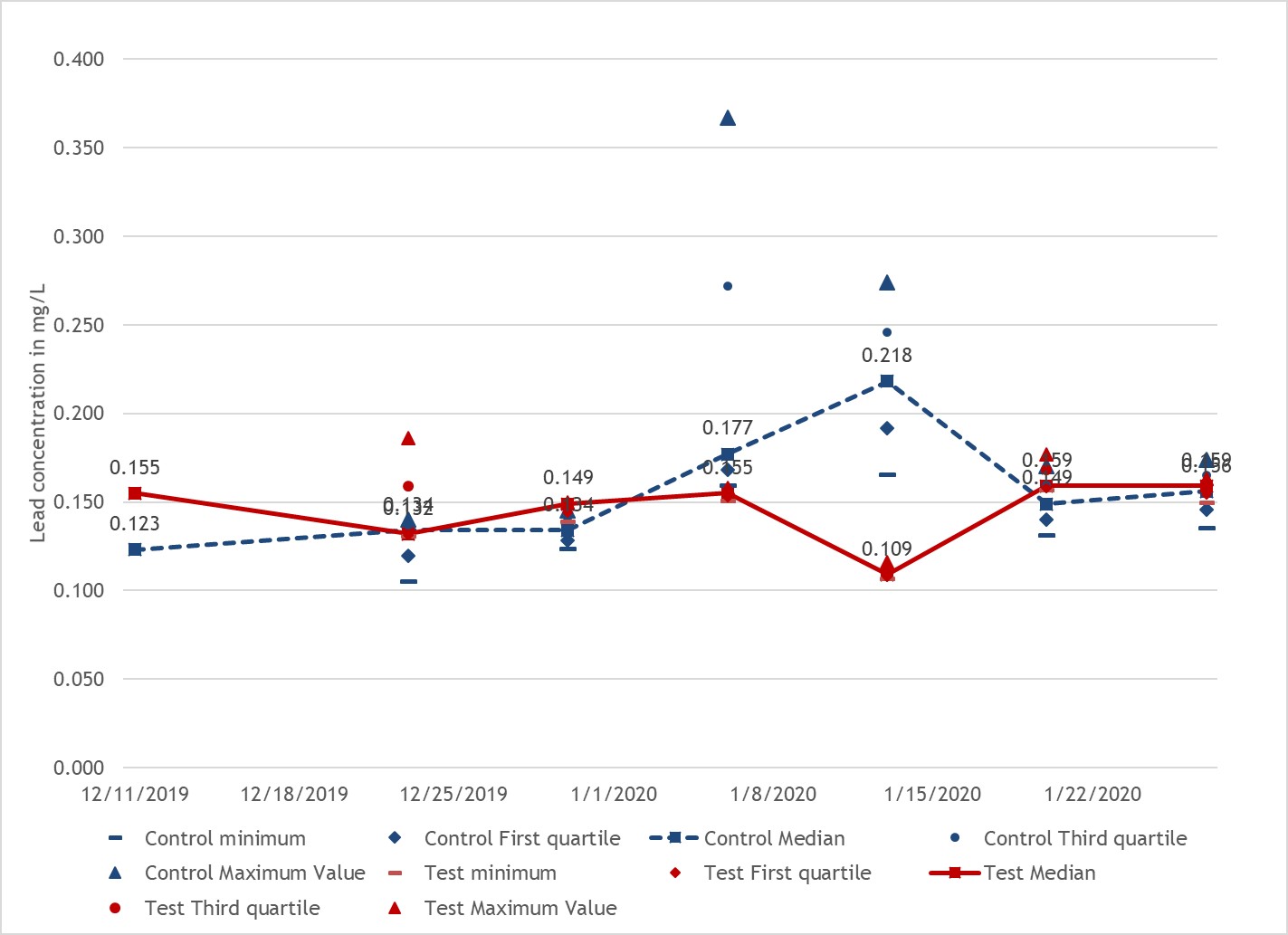
Composite lead concentrations were analyzed weekly from jars containing one of two types of metal coupons. Immersion test results are shown in the four graphs below. The free chlorine (control) scenario is the blue-dashed line and the future chloramine scenario is the red line. 


Figure 2: Weekly lead concentrations from jars with immersed lead coupons. Note: The December 11, 2019 data only has one sample per scenario due to a compositing issue.

  Figure 3: Weekly lead concentrations from jars with immersed copper with lead solder coupons. 

Immersion tests are imperfect and the cause of the lead concentration spike in the control scenario in mid-January is unknown. The median lead concentration between the test condition scenario (chloramines) and the control scenario (free chlorine) with both types of coupons was similar. Based on the immersion tests results, we don’t expect introducing chloramines into Craig’s distribution system to meaningfully affect the existing lead concentrations at customer’s taps. Craig’s 90th percentile average lead concentration from 2018 and 2019 was 0.0026 mg/L. The lead action level is 0.015 mg/L and the maximum contaminant level goal is 0.0 mg/L. The EPA and the Centers for Disease Control and Prevention (CDC) agree that there is no known safe level of lead in a child's blood. Lead is harmful to health, especially for children, therefore it is always advisable to minimize lead concentrations in water to the extent possible.

Copper results

Composite copper concentrations were analyzed weekly from jars containing one of two types of metal coupons. Figure 4 is the copper with lead solder coupon results and Figure 5 is the brass coupon results. 

 Figure 4: Weekly copper concentrations from jars with immersed copper with lead solder coupons. 

 Figure 5: Weekly copper concentrations from jars with brass coupons. 

Conclusions and Next Steps 

The median copper concentration between the test condition scenario (chloramines) and the control scenario (free chlorine) with both types of coupons indicate that some copper release may be expected. The immersion tests results indicate that introducing chloramines could increase copper concentrations by approximately 17% for the copper with lead solder coupons to 36% for the brass coupons. The immersion test is an experimental simulation and the model results may not be linearly correlated to the actual 90th percentile lead and copper results in the distribution system (e.g., a 36% jar results may not be a 36% increase in the 90th percentile). 

Craig will be monitoring lead and copper every 6-months for at least a year to ensure that the actual 90th percentile lead and copper results do not exceed the action levels. The copper action level and maximum contaminant level goal is 1.3 mg/L. In 2018 and 2019, Craig’s 90th percentile average copper concentration was 0.21 mg/L. Copper does not have the same health impacts as lead and is not a concern for developmental effects in children. Even though there may be a slight copper increase, based on the 2018/2019 customer tap sample results combined with the immersion study results, the potential copper concentration increase at customer’s taps should not affect public health. 

For more information on immersion testing please see the department’s Lead and Copper Corrosion Bench-Scale Testing Guidance Manual

Wednesday, January 29, 2020

Drinking Water Compliance

Reducing Disinfection Byproduct Violations

Disinfecting drinking water ensures that harmful contaminants such as bacteria, viruses, and other microbial pathogens will not exist in the finished water. However, the disinfectant itself can react with naturally-occurring materials in the water to form unintended byproducts that may pose health risks. This means that one operational goal for drinking water systems is maximizing disinfection efficiency while limiting the formation of disinfection byproducts.

There are many types of unregulated disinfection byproducts. For regulated disinfection byproducts, the EPA lists possible health effects that include an increased risk of cancer, liver and kidney problems, anemia, and nervous system problems—especially in fetuses, infants, and children. The EPA also lists possible reproductive and developmental health concerns.

Figure 1. Number of Disinfection Byproduct Violations by Year 


Violations by year


Since 2010, the department has issued the following violations for disinfection byproducts: 
  • 86 total haloacetic acids drinking water violations 
  • 208 total trihalomethanes drinking water violations 

It appears that after falling from 2010 to 2014, the number of violations increased from 2015 through 2018 before declining again in 2019. The department is not certain of the exact reason this occurred as disinfection byproduct formation may be impacted by numerous factors (e.g., organic content in the source water, water age, disinfectant dose, etc.). 


Minimizing disinfection byproduct formation


Because numerous factors can impact byproduct formation, we provide detailed resources on the Disinfectant and disinfection Byproduct rules webpageBelow are several ways systems can minimize disinfection byproduct formation.

Managing disinfectant dosage. Overfeeding disinfectant can increase disinfection byproducts formation. Eliminating pre-treatment disinfection may help reduce disinfection byproducts formation. Any change in disinfection practices must not sacrifice adequate disinfection for consumers’ protection. Operators that can reduce disinfectant demand can reduce disinfectant dosage without sacrificing water potability. Surface water systems should conduct a disinfection profile before changing disinfection practices. (Reminder: changes in treatment must go through a design review, so please contact the department before changing treatment to discuss.)

Managing water age. The longer finished water sits in storage or in the distribution system, the more total trihalomethanes and haloacetic acids will form. Operators should pay close attention to storage tank turnover and water use and should flush tanks and lines if necessary.

Removing disinfection byproducts precursors prior to disinfection. Naturally occurring organic matter (NOM) reacts with disinfectants to create disinfection byproducts. Operators should understand raw water quality and how it changes. Algae blooms, spring run-off, and human/wildlife impacts in the source water area are examples of activities that contribute NOM to source water. Operators may want to test raw and finished water for various precursors, including total organic carbon (TOC), dissolved organic carbon (DOC), specific ultraviolet absorbance (SUVA) or bromide, to assess if the treatment plant removes disinfection byproducts precursors effectively.

Managing pH. Changing the pH can affect disinfection byproducts formation. Different disinfection byproducts will either increase or decrease as the pH changes.

Being aware. Higher water temperatures can increase disinfection byproducts formation. While operators may not be able to control temperatures, they can carefully manage other factors that form disinfection byproducts while temperatures are high.

Asking for help! Hire an expert to evaluate possible solutions for controlling your water system’s disinfection byproducts formation. Water systems can use disinfection byproducts formation potential tests or pilots to predict the success of a proposed solution.


➽ Emily Clark, Nicole Grazianio and Bryan Pilson, drinking water compliance assurance section

Friday, November 1, 2019

Cover Story

Filtration and Disinfection Monitoring Requirements

Man wearing protective eye equipment, checking numbers on an electric instrument panel and using buttons to adjust the settingPublic water systems that use surface water—or groundwater that is directly influenced by surface water—must remove or sufficiently inactivate microbiological contaminants to ensure that drinking water is safe. This requires at least two pathogen barriers, one to filter and one to disinfect. Water systems confirm proper filtration and disinfection by monitoring for turbidity, chlorine, pH, and temperature. We may cite systems during sanitary surveys if they are not properly monitoring for each parameter. 

For filtration, the state’s drinking water regulations establish performance criteria based on surrogate monitoring of turbidity, which is the industry standard. For chemical disinfection, performance criteria are based on pH, temperature, and chlorine residual, which correspond to an estimated treatment using log inactivation equations. Appropriate monitoring consists of several key steps.

Key steps

  1. Monitoring in the correct locations
  2. Selecting appropriate equipment/instruments to monitor the parameter in question
  3. Using proper techniques to monitor
  4. Calibrating and verifying instruments in accordance with state and federal requirements
Most of the requirements for turbidity and chlorine residual calibration originate in the federal Safe Drinking Water Act. Therefore, the state cannot set less stringent requirements. Below are summaries of the requirements for each parameter.

Turbidity 

  • Online turbidity analyzers must be calibrated quarterly
  • Continuous monitoring means that measurements must be recorded at least every 15 minutes
  • Signals should be averaged over about 30 seconds to 1 minute but must not be averaged over 3 minutes
  • Results should be verified once per week with an alternative method, but this is not required

Chlorine analyzers 

  • Online chlorine analyzers must be verified with a handheld method once per week
  • Continuous monitoring means that measurements must be recorded at least every 15 minutes
  • Signals should be averaged over about 30 seconds to 1 minute but must not be averaged over 3 minutes

pH/Temperature 

  • Must be analyzed immediately after collection and never sent to the lab
  • pH must be calibrated daily 

A few systems in Colorado disinfect with ultraviolet light, chlorine dioxide, or chloramines, which require additional monitoring that will not be covered in this article. We work with systems that use these technologies on a case-by-case basis. Additional information can be found in our Policy 4 Guidance on Proper Operations of Water Treatment Processes.

Below are some resources that will give more specific information about the requirements outlined above. If you are concerned about your instrument monitoring system and calibration protocols, please contact Tyson Ingels at tyson.ingels@state.co.us.

Additional Resources


Colorado Primary Drinking Water Regulations
Safe Drinking Water Act


➽ Tyson Ingels, lead drinking water engineer

Friday, August 16, 2019

Coming down the pipe

Tracer studies and mixmaster tanks


Starting with the publishing of Safe Drinking Water Program Policy 4 in 2010, the department division began an effort to reassess all surface water treatment plants to ensure they use proper disinfection of surface water to meet both 4-log removal and inactivation of viruses (i.e. 99.99% removal and kill) and 3-log removal and inactivation of Giardia Lamblia cysts (i.e. 99.9% removal and kill). In 2014, the reassessment effort was restructured to provide more guidance and assistance to public water systems, and was named the Disinfection Outreach and Verification Effort (DOVE). DOVE includes an assessment of disinfection and documents treatment at all active surface water treatment plants. There were approximately 360 treatment facilities active in 2014. To date, the division has completed roughly 150 of those assessments with approximately 210 more to go.

A major issue that has arisen over the years is whether a treatment plant is over-estimating its baffling factor that it uses in relation to a tank that achieves contact time to kill viruses or bacteria. The baffling factor is essentially a penalty applied to each tank or pipe segment that estimates short circuiting in that particular tank. Most unbaffled tanks have a high degree of short circuiting, so these tanks typically receive credit for about 10% of the operating volume. For example, a rectangular concrete clearwell that operates at 10,000 gallons may only use 1,000 gallons in the calculation for disinfection treatment. Therefore, a baffling factor of 0.1, which represents 10% of the volume, is approved for most tanks. However, if there are special flow configurations and baffle walls within a tank, a tracer test may be run at the facility to determine the volume of water acting towards disinfection. This empirical testing at a facility is the most accurate method for determining whether the proper assumptions are being used to perform disinfection calculations, and the division recommends that each public water system runs the empirical testing at their own facilities.

Prior to the 2014 DOVE initiative, the division worked with the Colorado State University to determine appropriate baffling factors for pressurized tanks in series. These results were published by the division and CSU together. Also prior to 2014, a commercially available tank called the Flexcon® Mixmaster BAF120 was being used at certain public water systems. The Flexcon® company claimed a baffling factor of >0.8. After review at the time, the division allowed 0.7. In 2015, the division received information that perhaps the 0.7 baffling factor was an overestimation. Therefore, since the division had allowed many of these tanks to be installed, the division performed a set of baffling factor tests on the BAF120 tank and determined that the 0.7 baffling factor is correct. The division published an alternative acceptance document summarizing our findings. It is important to remember that the BAF120 tanks must be plumbed correctly and inspected during installation to ensure proper hydraulics (see figure).


Recently, additional manufacturers have come to market with tank systems that are designed to receive baffling factors similar to the Flexcon® Mixmaster tank series. Most of these commercially available tank systems are meant to assist small systems that have limited footprints and budgets in achieving appropriate disinfection contact time. Unlike the previous effort with the BAF120 tanks, the division will not perform tracer testing on behalf of manufacturers. Rather, the division will accept third-party-generated tracer test data and analysis that meet our tracer test guidance and make a determination of the baffling factor. Once a determination is made, the division will publish the baffling factor acceptance on our alternative acceptance page. Prior to gaining acceptance, proposed tanks will be approved with a 0.1 baffling factor unless a site specific tracer study is performed.

➽ Tyson Ingels, lead drinking water engineer and Gordon Whittaker, drinking water coach