Pages

Showing posts with label chlorination. Show all posts

Wednesday, July 19, 2023

Culture of Health: Water Borne Disease Outbreak Rainbow Valley Ranch

The department promotes a ‘Culture of Health’ in order to encourage water providers to provide the highest water quality practical and to avoid waterborne disease outbreaks. Generally the department relies on what we call “performance partners” which are operators and suppliers of water to ensure the drinking water is safe. There are times that property owners do not cooperate and it becomes all the more important for the partnership between professionally certified operators and the department to stand firm. In the situation below, which did result in human illness, the contract operator that visited the site was instrumental in helping us understand and discern the facts on the ground. While ultimately the owner chose to sell off a portion of the property to avoid being a regulated public water system, the important realtime information from performance partners in the field helped mitigate the effects of this outbreak. As it stands today, the community should be receiving hauled water from a nearby regulated public water system that is safe to drink, however there is not regulatory oversight of the situation. 

The department values the public health professionals and certified water operators that are the ‘boots on the ground’ helping to protect public health and the environment every day. “If you see something, say something.” It may make all the difference in helping prevent or stop a waterborne disease outbreak.

Outbreak Summary Report:

Rainbow Valley Ranch is a small community and fishing club located in Teller County, Colorado. Before this outbreak, Rainbow Valley Ranch was considered to be a nonpublic water system as they served fewer than 25 people for at least 60 days of the year. Nonpublic water systems are not required to comply with the Safe Drinking Water Act and CDPHE has no regulatory authority over their water system.

According to residents of Rainbow Valley Ranch, people reported illness in April 2022, and CDPHE epidemiologists and WQCD staff worked together to collect and analyze information. Ultimately, CDPHE confirmed this as a confirmed waterborne disease outbreak on July 25, 2022. Four people from multiple households met the case definition of an acute onset of gastrointestinal illness. All four cases were Colorado residents, no one was hospitalized, and all individuals survived the illness.

Epidemiology and Investigation Concluded: Illness was likely Non-Shiga Toxin-Producing Escherichia coli bacteria are found in surface water, like lakes and streams. These bacteria live in the intestines of mammals, and some can cause mild to severe gastrointestinal illnesses.

Summary of Sampling and Gastrointestinal illness:

  • 4 sick individuals
  • 5 total coliform positive results
  • 2 E. coli positive results 

Gastrointestinal Illness: 

Non-Shiga Toxin-Producing Escherichia coli infections can cause gastrointestinal illness with diarrhea and abdominal cramps, among other symptoms. These bacteria occur naturally in the intestinal tract of most animals and people, and can enter surface waters like rivers and

lakes through animal waste. When the people at Rainbow Valley Ranch drank the untreated surface water, the bacteria made them sick. 

Incident Timeline: 

  • April 1, 2022
    • At least one resident experienced gastrointestinal illness symptoms.
  • July 20, 2022
    • CDPHE received notification from a tenant at Rainbow Valley Ranch about their drinking water. According to the complainant, the landlord was using untreated lake water for the community’s drinking water and the complainant had diarrhea and blood in their stool. The complainant took a drinking water sample and sent it to the lab, where it was later confirmed as containing E. coli bacteria.
  • July 21, 2022
    • WQCD performed a site visit, reviewed the source (2 lakes) and treatment processes and collected total coliform samples. WQCD identified a filtration and disinfection system, but the disinfection was not connected to the water and the filtration system was not certified to remove bacteria or viruses. Chlorine results were non-detect.
    • In addition, WQCD completed a population count and determined that Rainbow Valley Ranch met the definition of a public water system and would need to comply with the requirements in the Safe Drinking Water Act.
  • July 22, 2022
    • WQCD received lab results from the total coliform samples showing the presence of total coliform and E. coli. The division issued a boil water advisory to the system, requiring the owner to inform all residents that they must boil their water before using it.
  • July 23-24, 2022
    • Teller County Public Health and Environment received several other complaints from Rainbow Valley Ranch residents who were experiencing similar gastrointestinal illness symptoms.
  • July 25, 2022
    • Teller County Public Health and Environment interviewed residents to gather information on symptoms, onset dates, and water quality issues. CDPHE evaluated information and sample results and determined this was a confirmed waterborne disease outbreak. CDPHE required that the owner continue to post the boil water advisory and maintain a 2 ppm chlorine residual until the issue was resolved.
  • August 31, 2022
    • The owner of Rainbow Valley Ranch reported that she has stopped using the lakes for water and is instead hauling water from a nearby public water system.
  • September 7, 2022
    • WQCD issued an enforcement order and required the owner to pay a penalty, correct sanitary defects, and hire a certified operator, among other things.
  • Late Fall/Early Winter 2022
    • The Owner subdivided the property and sold half in order to avoid being a regulated public water system. The fine is still in effect.

➽ Tyson Ingles, Lead Drinking Water Engineer

Wednesday, June 28, 2023

Chlorine Residual Monitoring and Pocket Colorimeters


During sanitary surveys, inspectors evaluate where chlorine residual sampling is being performed and will request to do side-by-side chlorine residual measurements with the operator. Chlorine residual monitoring is required both for entry point chlorine residual monitoring and also in the distribution system during bacteriological sampling. Public water systems that only use sodium or calcium hypochlorite or chlorine gas to form free chlorine for disinfectant residual should be monitoring and reporting free chlorine residual at all times. Conversely, any systems adding ammonia to form chloramines must monitor and report disinfectant residual as total chlorine residual. In this article, we will discuss handheld colorimeters and questions we’ve received from operators during sanitary surveys on properly measuring both high range and low range chlorine residuals. Improperly using an EPA accepted test method, using expired or incorrect DPD reagent or not verifying or operating disinfectant monitoring analytical equipment in accordance with manufacturer requirements can result in a violation of Regulation 11, Section 11.46. This was one of the Top 10 most cited violations cited during sanitary surveys in 2022.

The main issue inspectors often see in the field is measuring low range vs. high range free chlorine residual. For HACH pocket colorimeters (PCII) in the low range (LR) setting, a readout of 2.2 will flash repeatedly if the sample concentration is above 2.2 mg/L free chlorine. Recording the 2.2 mg/L as the chlorine residual is not correct and will result in a violation during a sanitary survey. The operator should be familiar with how to change their chlorine analyzer setting from low to high range. For a HACH DR300 or a HACH PCII, you must select the High Range (HR) menu option (please see your manual). For HACH units in High Range, the sample cell also changes to the plastic vial with a 5-mL sample and two 10‑mL DPD Free Chlorine Reagent Powder Pillows or two 10‑mL DPD Total Chlorine Reagent Powder Pillows must be used for each test. Please see your manual for your specific chlorine residual kit, and note that some manuals have to be downloaded online now.

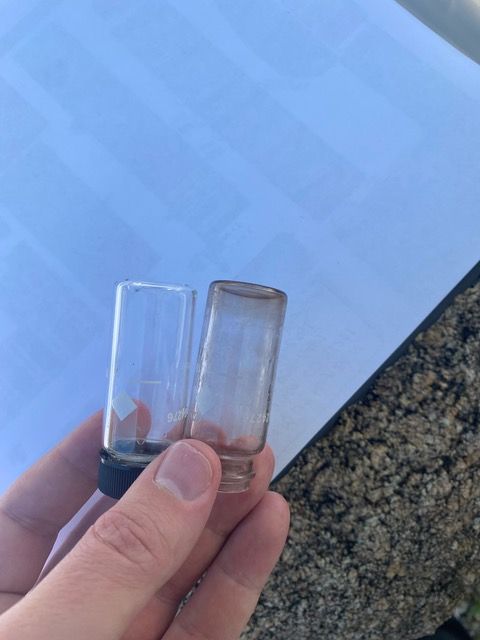
Other issues that can result in field based violations for chlorine residual monitoring is using expired DPD reagent and glassware that is caked with DPD (see photo below). 

Operators must be familiar with their colorimeter and should have written maintenance procedures and a maintenance log implemented for the analyzer, including routine verifications required by the manufacturer (HACH does not specify a frequency for pocket colorimeters but CDPHE does quarterly checks with GELEX standards on our pocket colorimeters). Please note that for online chlorine analyzers used for compliance with Regulation 11, online analyzers must be verified at least once a week by taking a parallel grab sample and analyzing it by another verified method (bench top) or by comparison with other parallel analyzers (see Policy 4 Guidance). All verification checks and results should be written down in a logbook.

Please avoid these field-based violations related to chlorine residual monitoring and ensure proper disinfection by being familiar with your analyzer and following proper sampling protocol. For any questions or concerns, please email our Field Services team at cdphe_wqcd_fss_questions@state.co.us.  

➽ Connor Clarke, CWP, Field Services Section

➽ Heather Young, PE, CWP Field Services Section

Wednesday, March 22, 2023

History of Disinfection Waivers and Where We Go From Here

 Hello everyone, 

In the Fall 2013 issue of Aqua Talk we ran a brief article regarding the history of disinfection waivers in Colorado and where we were planning to go in the future. We thought it would be a good time now to provide an update. 

In 1955 the State Board of Health recognized the tremendous risk reduction from waterborne disease that results from disinfecting drinking water, and adopted a resolution recommending that all drinking water supplied to the public contain at least 0.1 parts per million of free available chlorine. In 1967 the State Board of Health required disinfection of all drinking water unless that requirement was specifically waived by the Colorado Department of Public Health and Environment based on evidence that the drinking water was free of contamination.  

Over the years from 1967 to about 2000, approximately 126 disinfection waivers were granted across the state including 62 community water systems serving 60,695 people. The department lacked a systematic process for reviewing the status of these waivers on a periodic basis. The department began to review the status of disinfection waivers in about 2007, which was before the 2008 Alamosa waterborne disease outbreak. We found that many of these systems had already begun to disinfect their drinking water. 

In 2010, the Water Quality Control Commission banned new disinfection waivers and imposed more appropriate requirements on systems with disinfection waivers if they wished to retain them. After that, the division began systematically reviewing all the disinfection waivers in the state to make sure that they complied with the requirements and working with systems to get disinfection installed if their disinfection waiver was withdrawn. We continued implementing this rule, and systems that struggled with bacterial contamination had their waivers withdrawn. We also started to periodically review the waivers every year. By late 2010, the number of disinfection waivers fell to less than 40 public water systems. 

From late 2010 through about 2013, the division implemented the new requirements regarding disinfection waivers and many systems chose to begin disinfecting while several disinfection waivers were withdrawn as well. By late 2013 only about 15 disinfection waivers remained in place. Since then, the division continued to review disinfection waivers and withdraw waivers when circumstances merited, typically when multiple positive total coliform or E. coli events occurred without there being an adequate way to assure that such events would not recur.

As of 2023, only two (2) of the approximately 2,075 public drinking water systems in Colorado have disinfection waivers, and they are both at community water systems. The systems are the Towns of Ward in Boulder county serving about 230 people and Sanford in Conejos county serving about 850 people. Without further regulatory changes, those systems will retain their waivers as long as they continue to meet the regulatory requirements. We review the status of disinfection waivers annually, whenever there are total coliform rule violations or positive bacterial tests, and during sanitary surveys. The graph below displays the history of disinfection waivers in Colorado from the high point of 2007 to 2023.


➽ Ron Falco, P.E. Safe Drinking Water Program Manager

➽ Bryan Pilson, Technical and Regulatory Implementation and Coordination Unit manager


Wednesday, June 22, 2022

Microbial/Disinfection Byproducts (M/DBP) Federal Rule Update

Note: this article is part 2 of a series to read part one, please visit the Aqua Talk article posted on March 9, 2022

In 2020 EPA began stakeholder engagement as part of its review of Microbial/Disinfection Byproducts (M/DBP) Rules. The M/DBP rules are an important suite of drinking water rules designed to protect the public from the acute risks associated with waterborne disease outbreaks by requiring strong treatment and disinfection. However, the rules also try to balance the chronic health risk associated with cancer from certain disinfection byproducts. The Safe Drinking Water Program (program) engaged in this process and shared some of our thoughts and experiences with these rules.

In a prior Aqua Talk Article we briefly shared our overall input to EPA on a variety of topics including evaluating sources of drinking water that could be Groundwater Under the Direct Influence (GWUDI) of surface water and disinfection treatment evaluations, risks associated with storage tanks and our approach to requiring disinfection residual throughout distributions systems in Colorado. EPA asked us to provide more detailed information regarding our experience with preventing microbial contamination with focus on disinfection, storage tanks and cross connections. In this article we summarize the input provided. 

The Alamosa waterborne disease outbreak in 2008 catalyzed our efforts to reduce exposure to pathogens in tap water. Alamosa had deep wells and no disinfection in place while serving 8,900 people. One thousand three hundred (1,300) people were estimated to have been sick during the outbreak. Twenty people were hospitalized and one person died. Twenty six (26) percent of those that were ill reported symptoms lasting a year and a half later. It was also estimated that 40 percent of the infants in town got sick. In addition, the outbreak caused severe impacts to the economy, and numerous businesses closed. While the cause of the outbreak was most likely animal waste entering cracks or holes in a storage tank, calculations showed that it likely took very little waste to contaminate the entire water system. Thankfully Alamosa has since made improvements to their water system and now provides adequately disinfected drinking water and continues to work to ensure the safety and health of consumers. However, with our goal to minimize waterborne disease risks statewide, we tackled disinfection and backflow prevention in addition to storage tanks.

Beginning in 2014, the program worked with stakeholders to address these issues in our Colorado Primary Drinking Water Regulations (Regulation 11). Key changes to regulations involved:

  • Modified disinfection rules drastically reducing waivered systems
  • Implemented minimum disinfectant residual of 0.2 mg/L
  • Developed special rules for hand-pumped systems and water haulers
  • Developed a special rule requiring routine and comprehensive storage tank inspections
  • Updated and improved cross connection control rules

We shared with EPA some of the key results we have seen because of these changes, and will share some of that here.

Regarding disinfection waivers, the program has been regularly and thoroughly reviewing disinfection waivers and withdrawing waivers where needed, especially in response to positive total coliform or E. coli results in finished water. The chart below shows the number of public drinking water systems waivers has declined since 2007. By the end of 2022, we expect that there will only be two active disinfection waivers in Colorado. Overall, we believe that this decline in disinfection waivers better protects public health as the added pathogen contamination barrier of continuous disinfection is in place.


For the storage tank rule, we have about 1,400 storage tanks in the state subject to this rule. From April 2016 to August 2020, we issued about 300 violations of the storage tank rule and identified about 400 significant deficiencies involving storage tanks. Some of the specific items observed have included dead rodents in tanks as well as live snakes, and bullet holes. The most common concerns involve issues with hatches and vents. The good news is that well over 90% of these issues have been resolved. We believe this represents a significant improvement in risk reduction associated with storage tanks in Colorado as a result of implementing this rule.

We updated and/or developed handbooks related to water haulers and public water systems that operate primarily hand-pumped wells to include disinfection and operational practices. We also require that disinfectant residual in distribution systems be monitored and reported to the division. If values fall below 0.2 mg/L, then a treatment technique violation requiring tier two public notice can result. We also strengthened our ability to oversee the cross connection control rule and required that distribution systems be specifically surveyed for cross connections. Since 2016, hundreds of cross connection deficiencies and violations have been identified and corrected.

We believe that the overall risk reduction resulting from these efforts has been substantial. We have not had a waterborne disease outbreak at an active public drinking water system in Colorado since 2008. But waterborne disease outbreaks are tricky to confirm, so we also look at the number of E. coli violations. We think that looking over the course of decades is best to observe trends. Below are two charts showing both waterborne disease outbreaks and E. coli violations over the last few decades. As you can see, these trends show very positive results! 


This information was shared with EPA in 2021. We do not know exactly how EPA will use this information or the ultimate direction they will take with updating the M/DBP rules. We will keep you informed, and obviously you will have the opportunity to engage with EPA in this process as well. It will be the mid-2020s before EPA fully updates the M/DBP rules, but these are highly impactful rules and we encourage water systems to be aware of and engaged in the process. Thank you.

➽ Ron Falco, P.E. Safe Drinking Water Program Manager


Wednesday, February 16, 2022

Program Manager Message: A Culture of Health and notifying mobile home park residents to boil their water


In October 2021 a situation arose at Elephant Rock Mobile Home Park in El Paso County leading the department to determine that the drinking water could represent an immediate public health risk and that public notice was needed to let the residents know to boil their water. Over the course of the prior couple of months, the department became aware that the water system did not have a certified operator and that no one was ensuring an adequate supply of chlorine into the tap water. No compliance sampling was taking place. Based on our knowledge of the chlorination system, we estimated that the chlorine had run out. With no one running the system, no sampling and no chlorine, the department issued a bottled water advisory to the system requiring that public notice be delivered to the residents within 24 hours. 

However, no administrative contact or owner for the property could be located or contacted. The public notice was not going to be issued by the water system in a timely fashion. The department coordinated with El Paso County health and the city of Palmer Lake. Both of these entities were very concerned for the residents and their situations. The department decided that under a Culture of Health we needed to conduct the public notice ourselves and make sure the residents were informed. We prepared the public notice ourselves and had it translated into Spanish. We coordinated the logistics with local governments for awareness and coordinated with local law enforcement to ensure that everyone would be safe. Then, one of our staff members went to the mobile home park with a local police agent and provided the public notice to the residents. In general, they greatly appreciated the efforts we undertook to help protect them. Our actions also did catch the attention of the property owners, who later took steps to get the system operating properly again. We are still tracking this situation closely.

It is fully a public water system’s responsibility to comply with the Colorado Primary Drinking Water Regulation (Regulation 11), and this includes providing public notice when violations occur or other situations arise that involve letting people know that the water might not be safe to drink. This responsibility also includes providing public notice in the language that residents understand, in this case Spanish. We have had only a couple of instances in the last fifteen years, when a water system was unable to meet this responsibility to the extent that the department had to undertake the public notice activity on their behalf. This is a disappointing and disturbing failure on the part of the public water system. However, as an agency with a Culture of Health as our North Star, we will take action in these cases as needed. We will do this in coordination with appropriate local governments, and in a manner that keeps our staff and the public safe in a difficult situation. 

I wanted to share this story with you about our collective commitment with local governments to protect public health and ensure safe tap water for all. Thank you.

➽ Ron Falco, P.E. Safe Drinking Water Program Manager


Wednesday, October 27, 2021

Positive impacts of enhancing disinfection requirements - 2000s, 2010s, and today

We have written numerous articles over the years about disinfection and maintaining a proper chlorine residual.  Just search the blog for chlorine or disinfection and you will find excellent information and references from simple fixes to profound policy positions on appropriate disinfection residuals. Did you ever wonder how effective chlorination is in preventing drinking water contamination and what happened to disinfection waivers in Colorado?

In Regulation 11 rulemaking in 2010, the Water Quality Control Commission (commission) decided to remove the authority of the department to grant disinfection waivers. So at that time all waivers were evaluated and held static. The rulemaking also established more rigorous regulatory oversight for waivered systems. The rulemaking also required that all disinfecting groundwater systems had to maintain 0.2 mg/L at their entry points (surface water already had that requirement). Then, in the 2015 rulemaking to update the total coliform rule, the commission chose to establish a storage tank inspection regulation and also require that all systems maintain at least 0.2 mg/L chlorine residual throughout the distribution system. All of these rule changes were meant to recognize best practices performed by most water systems and to compel the few systems that were not up-to-speed to better protect their distribution systems. While the yearly data is noisy, it is important to recognize that the overall number of E.coli positive samples reported to us per year went dramatically down around the mid-2010s. See the graph below and table below.


It is also worthwhile to look back further at the trends over a few decades:


It’s apparent that over time E. coli violations dramatically decreased. Since about 2014, the majority of E. coli violations occurred at public drinking water systems that were out of compliance with the state’s disinfection requirements. 

As the 2010s progressed, we developed rigorous protocols to evaluate systems that maintain disinfection waivers to make sure public health was being protected without disinfection present. Therefore, over time, the department revoked waivers at systems that could not maintain compliance with the rigorous regulatory requirements for waivered systems. Other waivered systems voluntarily began chlorinating their water systems based on concerns over liability and realization of the relatively low level of effort that chlorination requires. 

At present, only two public water systems still maintain disinfection waivers. These two systems are the last disinfection waivers that will be used in Colorado. These communities have shown through regulatory compliance and their track record of water quality that the public in those communities has a measure of protection from waterborne disease even though they do not chlorinate. However, these communities ultimately may choose to chlorinate their water in the long term. The department’s position would be that it is always best to chlorinate when possible. Also, through natural disasters, aging infrastructure, or unforeseen events, the two systems may ultimately end up having their waivers revoked due to failure to maintain compliance.  

As discussed in the previous blog postings about the importance of chlorination, Colorado has a proud tradition of protecting our public drinking water supplies to the greatest degree possible.

Tyson Ingels, P.E Lead Drinking Water Engineer

 Ron Falco, P.E. Safe Drinking Water Program Manager

Wednesday, October 6, 2021

Simple Fixes - Chlorine Monitoring with Pocket Colorimeters

Whether you're a large system or small, surface water or groundwater, free chlorine or total, monitoring at the entry point or in the distribution system, water quality monitoring of disinfection residual is an important part of the job. Disinfection residuals are vital to protecting public health and must be reported to the state to show compliance with drinking water regulations. If your go-to monitoring equipment is a Pocket Colorimeter, here are some important things to keep in mind when monitoring chlorine residual.

  1. My pocket colorimeter is flashing “2.2”; what does that mean? Some pocket colorimeters have the option of low range and high range. For chlorine values less than 2.0 mg/L, it’s best to use low range for the greatest accuracy as high range is subject to variable levels of interference. But

    if the instrument consistently reads 2.2 or flashes 2.2, the high range procedure needs to be followed. Using the special high range sample cell, follow the normal steps of zeroing the sample prior to adding the reagent. For Pocket Colorimeters, you’ll add two 10-mL doses of reagent to a 5-mL sample and read. It’s always good practice to review (or re-review) the procedure as a reminder of the proper sequence for analyzing samples.


  2. Have you checked your glassware lately? Dirty glassware can lead to erroneous readings. Hold the glassware up to a white sheet of paper.  Does the glassware look clear or can you see a black film build up? If so, it might be time to purchase some new glassware. You can also try an at home remedy with a 50/50 mix of white vinegar and water. Leave the glassware to soak overnight and rinse out in the morning. Do not use a scrub brush or abrasive cleaning utensil of any kind as that may scratch the glassware.
  3. Free? Total? There’s a difference? There is a difference and you want to make sure you are analyzing for the correct chlorine based on your monitoring schedule.  Free chlorine reagent reacts with free chlorine in the sample, and should be read immediately. Total chlorine reagent reacts with ALL the chlorine present in the sample and requires a 3 minute hold time before reading. If your system uses chloramines or receives water from a chloraminated system, then you need to monitor for TOTAL chlorine. Performing a free chlorine residual reading for a chloramine system, will result in a reading of little to no chlorine. This is because
    most of the free chlorine has bonded with ammonia to produce chloramine. If you operate a free chlorine system and use total chlorine reagent, you won’t see a significant difference, but generally the total will be higher as it has reacted to ALL the chlorine in the sample, and not just the free chlorine. The important thing is to make sure you are using the correct reagent that corresponds to your monitoring schedule.
  4. Is your reagent current? Check expiration dates. Make sure your reagents used for analyzing and reporting residuals to the state are current. A lot of systems out

    there like to use the Swiftest Dispensers. Make sure you know what the expiration date is on the DPD, especially if you’ve acquired the product from a secondary market. 

Aspen Coombs, PE, Senior Field Engineer


Thursday, August 19, 2021

Culture of Health: Unregistered Water Systems

Unregistered Water Systems Can Pose a Risk to Public Health


In spring of 2021 the department learned that a small mountain resort was open to the public and serving untreated groundwater under the direct influence of surface water (GWUDI). The water supplier was aware of its lack of treatment and had historically been in contact with the department but failed to notify us upon reopening to the public. Inadequately treated GWUDI can contain disease-causing organisms and other contaminants with acute health effects. It is the supplier’s responsibility to put public health first by contacting the department prior to serving water and ensure that, if applicable, it is in compliance with the safe drinking water regulations. Please read on to discover how the involved parties responded to the situation in order to best protect public health and how other water providers can do the same.

The supplier had historically been classified as a regulated public drinking water system serving groundwater under the influence of surface water. After submitting documentation that the resort was no longer open to the public, the water system remained unregulated for several years. Aware of the regulatory requirements and their lack of filtration and disinfection treatment, the supplier reopened its resort to the public. Upon receipt of this information, the department issued a boil water advisory to be immediately distributed throughout the resort due to the increased risk associated with untreated GWUDI. The department also issued a violation for their failure to provide adequate treatment.

As the situation evolved, water samples were collected and shown to contain coliforms which are organisms known to exist in the digestive tracts of animals. Coliforms can indicate the presence of microbial contaminants with acute health effects such as viruses, bacteria, and protozoa. The purpose of filtration and disinfection treatment is to inactivate and remove such organisms before they can cause harm. Some unregistered water suppliers have treatment installed, however it may not be meeting the minimum removal and/or inactivation requirements needed to protect public health. That is one of the reasons that each new public water system’s treatment system is reviewed by the department.

While under a boil water advisory, the resort chose to temporarily close and immediately began working with a certified operator to install chemical disinfection. Within 11 days, a chlorinator was installed, operational, and providing disinfection at the required interim level. Following the installation, multiple sample results confirmed that coliform was no longer active in the water and now, several months later, the supplier is on track to have a filtration system installed as required under Regulation 11’s Surface Water Rule. As we have worked towards an acceptable resolution, the water supplier has been cooperative and has worked quickly to return to compliance.

Unregistered water suppliers can pose a serious threat to public health by exposing the public to potentially harmful pathogens if the appropriate treatment systems are not installed and properly operated. Even suppliers that have some form of treatment may not be meeting the minimum removal and/or inactivation requirements needed to protect public health. These scenarios create conditions that could lead to waterborne disease outbreaks. If you are a water supplier or operator in Colorado, thank you for joining us in our mission to protect public health. If you are aware of any unregistered systems in Colorado, the department requests that you contact the compliance specialist for your region and work with them to determine whether the system meets the criteria of a public water system. Together we can ensure that the water meets safe drinking water standards and better serve the citizens and visitors of Colorado.

Jamie Duvall, Drinking Water Compliance Specialist


Wednesday, May 12, 2021

Success Story: Seasonal Start-up Procedures

Reopening Your Seasonal Water System

Of the approximately 2,050 active public water systems in Colorado, nearly 20% (407) are seasonal. Unfortunately, roughly 10% of all our state’s public water systems have reported that they are temporarily closed or have delayed their seasonal operations due to the pandemic. It seems there is light at the end of the tunnel as Colorado’s COVID-19 Dial has been retired and the responsibilities of restrictions have been handed over to counties. In addition, vaccination is now available to all. Many seasonal and year-round water systems are gearing up to reopen for the summer. We here at the Department wish for everyone to prosper and stay safe while doing so; we would like to remind all seasonal systems of their requirement to complete the Department’s seasonal startup procedures prior to serving water to the public.  

On April 1, 2016, the Revised Total Coliform Rule (RTCR) of the Colorado Primary Drinking Water Regulations (Regulation 11) became effective. One item that was incorporated or modified was the seasonal systems and start-up procedures. The Department created the “Department’s Revised Total Coliform Rule Start-up Procedure for Seasonal Systems Handbook” (seasonal system handbook) to help guide these systems on how to evaluate and ensure that their waterworks and water have been properly inspected, disinfected and treated prior to service to the public. (See below for specific information about hand-pumped well systems). Here are some key highlights of what can be found in the seasonal system handbook: 

  • Conduct a waterworks inspection: look for any damage or evidence of contamination and ensure all sanitary seals are intact.
  • Integrity check: identify leaks in the waterworks as these pose a potential avenue for contaminants to enter the water system. 
  • Disinfection and flushing: disinfect the water system prior to opening to kill any microorganisms that could’ve been introduced during the offseason. 
  • Special Purpose Sampling: collect a “special purpose” total coliform (TC) sample within the distribution system prior to opening (must test absent for the presence of coliform bacteria). Please note that this sample does not count as your “routine” compliance sample. 
  • Routine Sampling: A routine TC sample must be collected within the first month of operation. This TC sample must be collected after seasonal start-up procedures have been completed. For example if a supplier collects a special purpose TC sample on May 10,  but does not complete start-up procedures till May 12, and the supplier begins serving water to the public in May the supplier must collect a routine TC after May 12 to satisfy that month's monitoring requirement.
  • Certification: submit a “Certification of Completion of Start-up Procedures” to the Department no later than the 10th day of the following month after startup.
  • Record keeping: hold onto your “Seasonal System Start-up Log” along with the special purpose total coliform sample result, as these will be reviewed during sanitary surveys. For these reviews, please note that it would be beneficial if you add details to your start-up log concerning your disinfection and flushing procedures such as chlorine dosing levels and hold times. 
  • What’s new: seasonal systems with finished water storage tanks, two periodic tank inspections are required each year. One must be conducted while completing the seasonal startup procedures and another while serving water to the public and at least 30 days after the pre-opening inspection.

Since the RTCR rule came into effect, Colorado seasonal water systems have been increasingly successful at doing a great job of following the seasonal system handbook and submitting their certificate of completion. The Department is appreciative and hopeful that operators and systems continue this trend moving forward.


For those year-round systems that have been closed due to COVID-19, in the interest of public health the Department strongly encourages that procedures matching the seasonal startup procedures in the handbook be completed prior to opening. Even if water pressure and treatment have been maintained while closed, a thorough system super-chlorination and flushing to remove any stagnant water should be conducted due to Legionella contamination concerns. For suppliers who own and/or operate premise plumbing systems, the system flushing should also include a thorough flushing of the hot water distribution system and tanks. A pre-opening special purpose total coliform sample should be collected prior to serving the public. The Department also expects a routine total coliform sample to be collected within the first month of operation if monitoring is less frequent than monthly. 

Together we can make the summer of 2021 a much-needed period of renewal and growth. As a resource for water systems restarting operations, the seasonal systems handbook along with the certificate of completion can be found here under Guidance.

Did you know: Did you know that there are roughly 75 hand-pumped active water systems in the state of Colorado? You may have seen one or more of these hand-pumps if you’ve ever enjoyed any of our state’s stunning campsites. But did you also know that these hand-pumps, much like seasonal systems, have their own policy, sampling requirements and guidance that they follow to ensure that the water that is served to the public is safe? One of these requirements is to conduct a seasonal start-up. For more information on hand -pumps please visit the division's RTCR website


Wednesday, February 17, 2021

Simple Fixes - chlorine addition points and hydropneumatic tanks

In Colorado there are approximately 2,100 public water systems ranging from a small gas station with a drinking water well up to Denver Water serving 1.4 million residents. Nearly 1,600 of those 2,100 public water systems serve 500 or less people. Many times, those very small systems consist of a simple groundwater well, hydropneumatic pressure tank (pressure tank), and a small distribution system. Oftentimes the distribution system at the smallest systems is only one building. Other than hand-pumped wells at campgrounds (which operate under a special rule), the remainder of public water systems must continuously chlorinate their source water and provide a chlorine residual throughout distribution greater than 0.2 mg/L. 

For some water systems, the appropriate location for the chemical injection point can be a point of confusion. This confusion may be exacerbated by the fact that the Colorado Division of Water Resources rules for well drillers has traditionally defined the scope of the water well supply system as being part of the well driller’s responsibility. Typically this is up to and including the pressure tank if installed. The definition from the well driller’s rule is as follows:

 5.2.56 “Water well supply system” includes all components of a groundwater well, pump, drop pipe, pitless adapters or units, other pumping equipment, storage tanks or cisterns, and piping and connections between the well and its point of discharge from the pressure tank, if such a tank is installed. 

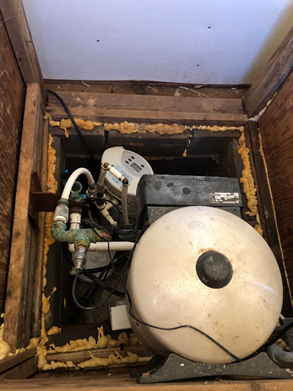
Based on the above definition, a well driller may install a water well, pressure switch, and a pressure tank. Then, when a system becomes a public water system, it must add chlorine feed. Typical installation of chlorine feed involves linking the feed pump to an existing pressure switch that turns on both the well pump as well as the chlorine injection pump. In some cases, we have discovered that a public water system has installed their chlorine injection point at a location after the hydropneumatic pressure tank. 

The main issue with having the injection point after the pressure tank, but the chlorine feed pump linked to the well pump is that the pressure tank can discharge water to the distribution system even when the well pump isn’t running. This means that raw water (unchlorinated well water) would be fed to distribution without a chlorine residual, which may not be safe.  Per Sections 11.11 and 11.8 of the Colorado Primary Drinking Water Regulations (Regulation 11), water must be continuously chlorinated at the entry point. Therefore, whenever our field inspectors discover a situation where the pressure tank may be located in the potentially unsafe configuration, the issue is cited as a significant deficiency in the inspection findings and must be repaired.  

Fixes to the improper chlorine feed point:

Solution #1: Move the injection point:

Many public water systems choose to simply relocate their chemical injection location to a location prior to the pressure tank. This change will solve the significant deficiency of having unchlorinated water enter the distribution system. A typical schematic after correction is as follows:


*image courtesy of University of Georgia Extension

In the above example, please note that a carbon filter may remove all the chlorine residual, which is not allowed in Colorado because a 0.2 mg/L chlorine level must be maintained throughout the distribution system. Also, the chlorine metering pump can continue to be linked to the well pump on a pressure switch. 

Some water systems and water professionals have expressed concerns about the chlorine feed degrading the rubber bladder in the pressure tank and have indicated they prefer to keep the chlorine feed location after the pressure tank. If that is the case, then solution #2 may be a better option.

Solution #2: Install a flow switch to inject chlorine when there is flow

A second solution is to leave the chlorine injection point after the pressure tank and install a flow switch so that the chlorine feed pump is activated when flow is detected rather than when the well pump is turned on. A typical installation of a proportional flow meter or flow switch can be seen in our pre-accepted groundwater disinfection design document and is in the following schematic:


Typically, flow switches can be purchased from a variety of locations including usabluebook, amazon, grainger, omega, and more. The department strongly recommends small water districts employ personnel who have experience working with and installing such components if they choose to configure their system to work with a flow switch and it has been previously plumbed to use a pressure switch. Certified plumbers may also have the expertise necessary to perform the system upgrades.  While we do not require design approval to convert from a pressure switch to a flow switch, the department is happy to provide technical assistance if there are questions about the installation.


Wednesday, February 3, 2021

Program Manager Message

Looking Ahead to the 2020s

A few months ago, we republished an Aqua Talk article I authored in late 2009 entitled “Perspectives on a New Decade.” It looked back on what happened in the 2000s and attempted to look forward to what might happen in the 2010s. Then, in December we published an article titled “Perspectives on the 2010s” reviewing what actually happened in the 2010s. Now let’s  look forward to the 2020s. I know this is coming out a year late, but considering what happened in 2020, that worked out for the best as no one could have predicted the start to this decade that we actually experienced. 

In the 2020s we will not take our eye off the ball in terms of focusing on preventing waterborne disease outbreaks. We intend to continue vigorous implementation of our rules regarding disinfection waivers, storage tanks, backflow prevention and cross connection control, disinfectant residual in distribution, hand pumps, and water haulers. We hope to see a continued positive track record of no waterborne disease outbreaks and only rare E. coli violations in drinking water. However, new challenges will arise on this front as well. Pathogens present in biofilms have recently been shown to cause most of the serious health problems and health care costs related to waterborne disease in the United States. As EPA reviews the suite of Microbial/Disinfection Byproducts Rules in the early to mid-2020s, they will be considering these pathogens like Legionella and also more disinfection byproducts and different health endpoints, such as fetal development.

The 2020s will involve continued focus on lead and PFAS. EPA just finalized the Lead and Copper Rule Revisions (LCRR). The new administration is going to review this rule, and once it is truly finalized, Colorado will have two years to adopt the federal rule. Adopting this rule will involve a thorough stakeholder process, and of course our final rule must be at least as stringent as the federal rule. However, once the rule is final it will take years of effort to fully implement the rule, especially for systems with lead service lines. The revised rule will include efforts to sample at schools and daycares, and we will be able to provide some support in that area using a federal grant program. 

EPA also finalized their regulatory determination for PFAS compounds and indicated that they will move forward with MCLs for PFOA and PFOS. Again, the new administration may revise this approach. Additionally, many more PFAS compounds must be included in the fifth Unregulated Contaminant Monitoring Rule (UCMR5) sampling efforts under federal law. Fortunately, the sampling that we have done proactively in the late 2010s shows that we likely do not have a large number of water systems with high PFAS levels, but only about half of the community systems have been sampled so far.


As climate change continues to impact Colorado’s water supplies and the temperature of state waters, we could also see more harmful algae blooms and the threat of cyanotoxins being present in drinking water sources and possibly tap water. We have good programs in place to try to address underlying nutrient pollution and monitor for blooms, but these programs are not comprehensive so we are at some risk.

During the 2020s, we also intend to develop a regulatory framework including regulations, policies and guidance to assist water systems in planning and implementing direct potable reuse if needed. Direct potable reuse can help Colorado move forward with our State Water Plan. The framework for direct potable reuse is intended to have flexibility and ensure safe drinking water and help with public support. But we also intend to prevent communities without adequate technical, managerial, and financial capacity from undertaking such a serious effort.

While drinking water in Colorado is safer today than ever before, the world is not necessarily safer. In 2020 we saw considerably more vandalism and cyberattacks against drinking water infrastructure than normal. I hope that trend does not continue, but unfortunately I believe that this will be an added pressure on all of us for the foreseeable future.

It will take resources for water systems to continue their track record of improving water quality and for the Safe Drinking Water Program to enhance our services in support of those efforts. I am hopeful the recently increased federal funding will continue and be increased further to help us with implementing the expected new LCRR and PFAS rules plus help us support security needs.

Even with all these expected challenges ahead and those that we cannot anticipate as well, I am not losing sight of the fact that, as mentioned before, our tap water is safer than ever and that is something to celebrate and be proud of. We launched a Culture of Health, and I believe it is catching on. We will continue our partnership with water systems, EPA, local health departments and operators to foster a Culture of Health throughout the community of water suppliers. With a Culture of Health firmly entrenched in all of us, we will be ready to face challenges and succeed! I cannot predict what the drinking water world will look like in 2030, but hope we have some fun this decade on that journey!  

Ron Falco, Drinking Water Program Manager


Wednesday, January 27, 2021

Assistance Grants Successes

Meadow Mountain Water Supply 

The calendar year 2020 wasn’t all bad, especially for drinking water systems that received funding under the assistance grants program. With support from division staff, this program provides funding up to $25,000 to public drinking water systems that need help addressing a water quality challenge. 

One system that received funding from this program, Meadow Mountain Water Supply, installed corrosion control treatment to ensure their drinking water is in compliance with the lead and copper rule and that all the water distributed to their customers is safe. As a small system serving 80 residents, the project expense was a challenge for the system. With assistance grant funding, Meadow Mountain installed a soda ash system to prevent the water from leaching lead out of homeowners’ indoor piping. According to Rachel Barkworth, the administrative contact for the system, “We were delighted to be recommended for the assistance grant program as we are a very small community system and have a lot of financial challenges. The grant came at just the right time to assist us in accomplishing our goals to maintain compliance. The grant process itself, although requiring a lot of information, was clear and easy to follow once approved. Division staff was especially helpful in navigating this process.”

Town of Dolores
The Town of Dolores also used assistance grant funding to address challenges with disinfection contact time. After a visit, the division recommended that the Town of Dolores move their entry point residual disinfectant monitoring location to allow the system to more accurately calculate their contact time and meet the requirements for surface water disinfection. Assistance grant funding paid for approximately 50% of the total project cost and greatly helped the system complete this necessary work during a stressful year. 

This program begins coordination efforts with division staff in August of each year. If you believe your system would be a good fit for this type of project, please contact Kaitlyn Beekman at kaitlyn.beekman@state.co.us. 

Kaitlyn Beekman, Communications & Special Projects Unit

Wednesday, August 26, 2020

Corrosion immersion testing case study – Chloramine conversion project results

Background

In Spring 2020, the City of Craig switched disinfection treatment from free chlorine to chloramines to address frequently low free disinfectant residuals in their distribution system. Low disinfectant residuals increase risk of pathogen presence in tap water, which can lead to waterborne disease outbreaks. Since this treatment change could potentially affect water corrosivity, the City and the Department teamed up to conduct a proactive immersion study to simulate whether the chloramines would impact lead and copper levels in the distribution system. In the last article, we discussed the setup of the City of Craig’s corrosion immersion study.

The experiment tested two water scenarios: the free chlorine potable water (control scenario) and chloramine water (chloramine test scenario). Since individual home plumbing materials vary in the distribution system, three materials were tested: lead, copper with lead solder, and brass. Each material was tested under both water conditions with the water in the jars being changed out three times per week.


Figure 1: Jars with copper with lead solder and brass coupons. The experiment took place from early October 2019 to late January 2020, over approximately 13 weeks. For the first 6 weeks, all the sample jars were filled with the free chlorine water. This stabilized the metal samples and     simulated the current conditions of the distribution system pipes. The second 7 weeks, half of the jars were filled with the free chlorine water        (control scenario) and half the jars were filled with the future chloramine water (chloramine test scenario).

Craig water treatment staff created the test chloramines water by dosing ammonia to the free chlorine water and checking the total chlorine and ammonia concentrations. The staff refreshed the water in the jars three times per week. Water from each jar was collected and the three samples combined into a single sample per week per jar, which is called taking a weekly composite sample. The composite samples were analyzed for lead and/or copper at the State laboratory. 

Lead results

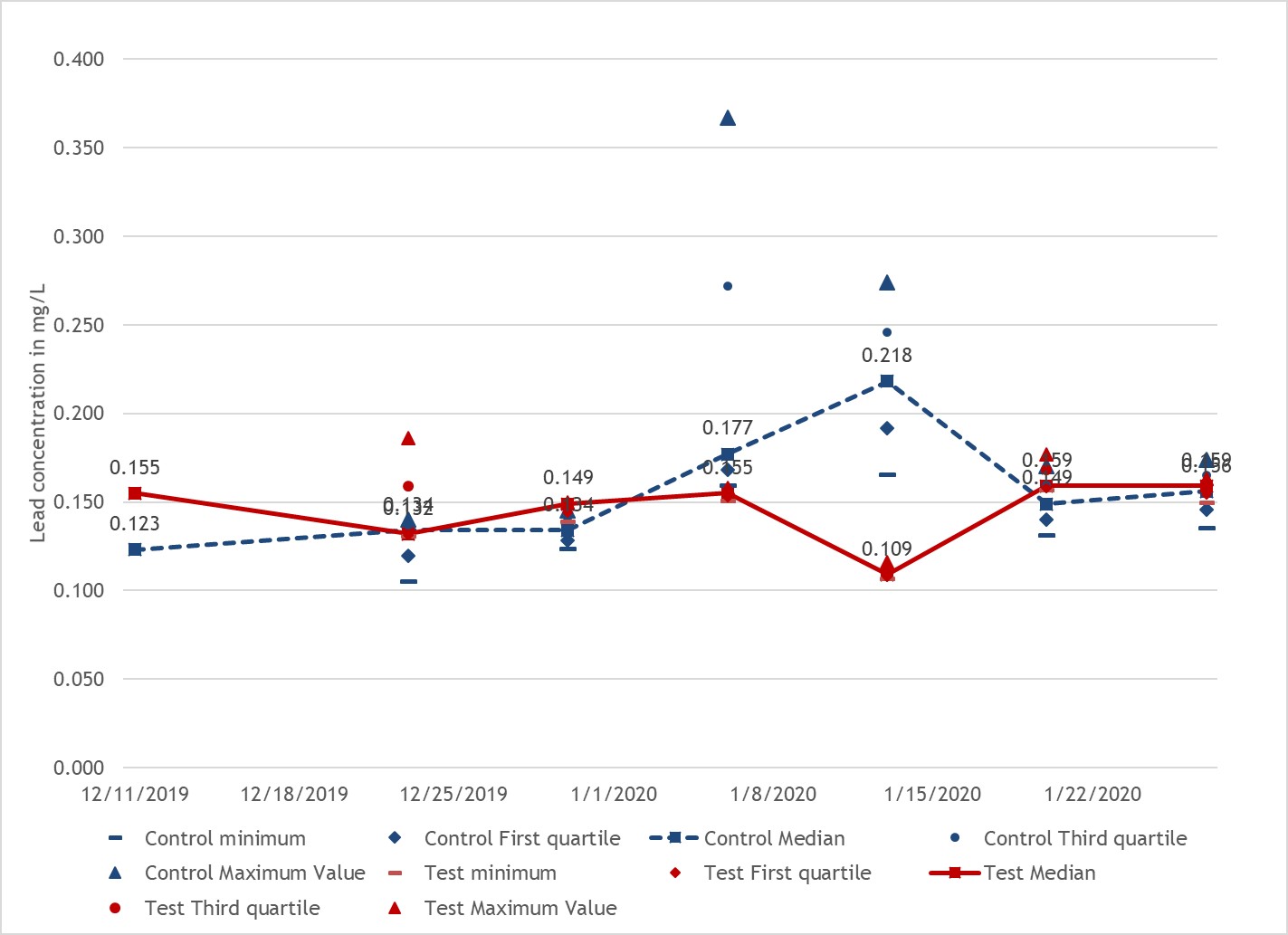
Composite lead concentrations were analyzed weekly from jars containing one of two types of metal coupons. Immersion test results are shown in the four graphs below. The free chlorine (control) scenario is the blue-dashed line and the future chloramine scenario is the red line. 


Figure 2: Weekly lead concentrations from jars with immersed lead coupons. Note: The December 11, 2019 data only has one sample per scenario due to a compositing issue.

  Figure 3: Weekly lead concentrations from jars with immersed copper with lead solder coupons. 

Immersion tests are imperfect and the cause of the lead concentration spike in the control scenario in mid-January is unknown. The median lead concentration between the test condition scenario (chloramines) and the control scenario (free chlorine) with both types of coupons was similar. Based on the immersion tests results, we don’t expect introducing chloramines into Craig’s distribution system to meaningfully affect the existing lead concentrations at customer’s taps. Craig’s 90th percentile average lead concentration from 2018 and 2019 was 0.0026 mg/L. The lead action level is 0.015 mg/L and the maximum contaminant level goal is 0.0 mg/L. The EPA and the Centers for Disease Control and Prevention (CDC) agree that there is no known safe level of lead in a child's blood. Lead is harmful to health, especially for children, therefore it is always advisable to minimize lead concentrations in water to the extent possible.

Copper results

Composite copper concentrations were analyzed weekly from jars containing one of two types of metal coupons. Figure 4 is the copper with lead solder coupon results and Figure 5 is the brass coupon results. 

 Figure 4: Weekly copper concentrations from jars with immersed copper with lead solder coupons. 

 Figure 5: Weekly copper concentrations from jars with brass coupons. 

Conclusions and Next Steps 

The median copper concentration between the test condition scenario (chloramines) and the control scenario (free chlorine) with both types of coupons indicate that some copper release may be expected. The immersion tests results indicate that introducing chloramines could increase copper concentrations by approximately 17% for the copper with lead solder coupons to 36% for the brass coupons. The immersion test is an experimental simulation and the model results may not be linearly correlated to the actual 90th percentile lead and copper results in the distribution system (e.g., a 36% jar results may not be a 36% increase in the 90th percentile). 

Craig will be monitoring lead and copper every 6-months for at least a year to ensure that the actual 90th percentile lead and copper results do not exceed the action levels. The copper action level and maximum contaminant level goal is 1.3 mg/L. In 2018 and 2019, Craig’s 90th percentile average copper concentration was 0.21 mg/L. Copper does not have the same health impacts as lead and is not a concern for developmental effects in children. Even though there may be a slight copper increase, based on the 2018/2019 customer tap sample results combined with the immersion study results, the potential copper concentration increase at customer’s taps should not affect public health. 

For more information on immersion testing please see the department’s Lead and Copper Corrosion Bench-Scale Testing Guidance Manual

Friday, April 5, 2019

Success stories

Bringing a recently regulated public water system into compliance

Wellhouse before design approval and modifications
During the year, the department routinely activates anywhere between 10 to 30 “unregistered” public water systems. These are systems that have been in routine operation, but have not been regulated. Many of these systems struggle with meeting the drinking water regulatory requirements (e.g. installing disinfection, hiring an operator, developing a monitoring plan, sampling, etc.). In 2017, due to customer complaints, the department activated an unregistered system in Teller County that is a year-round campground and serves approximately 20 residents and 50 transients. Initially, the owners feared the cost of installing treatment and ensuring compliance with the drinking water regulations would force them to shut the campground down.

In July 2017, the system was placed on a boil water advisory due to confirmed E. coli in the distribution system and lack of chlorination for their groundwater well. The advisory was escalated to a bottled water advisory in October 2017 due to high levels of nitrate in addition to the detected E. coli in the drinking water. The system was issued a formal enforcement order in April 2018 for numerous unresolved violations, including ongoing failure to disinfect the drinking water.

The system contacted the department’s local assistance unit in late March 2018 for assistance with completing plans and specifications for a new treatment system and well/wellhouse upgrades. During five separate coaching visits, the coach worked with the campground owners to complete a design submittal for a new treatment system, ensure proper chlorinator installation, and inspect the final project after completion. As of October 2018, the system has an approved chlorination system installed and in operation. This project would not have been possible without the extensive collaboration between the water system owners and the department’s drinking water compliance assurance section, the engineering section, the field services section, and the assistance coach. Through the collaboration efforts, the water system realized the compliance issues were solvable and could be completed without hindering their business.
Wellhouse after design approval and installation of treatment system


The system’s disinfection treatment project also included wellhead and source water protection improvements to address both nitrate and E. coli issues, and expansion of the existing treatment building to accommodate a contact time pipeline. After over 16 months of being on a boil water advisory due to E. coli in the distribution system, the advisory was rescinded in early November 2018 as the department determined the system is operating properly and providing safe drinking water to the public. The department is continuing to work with system to meet the drinking water regulatory requirements and to close the enforcement order in the near future.

➽ Haley Orahood, compliance assistance and Mike Bacon, local assistance coach